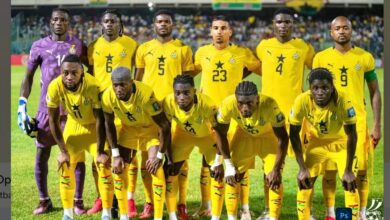
Death, devastation in Morocco: as AFCON host community reels ahead of tournament
Tragic building collapse in Fez casts shadow over AFCON 2025


By Paul Lucky Okoku
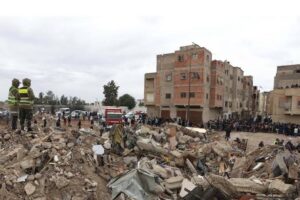
Just days before the *Africa Cup of Nations (AFCON) 2025* gets underway, Morocco is grappling with a tragedy that has shaken one of its host cities to the core. In the historic *Al-Mustaqbal neighborhood of Fez,* two adjacent four-story buildings collapsed overnight on *December 9–10, 2025,* killing at least *22 people* and injuring *16 others.* One of the buildings was hosting an *Aqiqah celebration*, a moment meant to mark new life, when the structure gave way in the quiet hours of the night. *Four children were among the dead.* Search and rescue teams worked tirelessly, while authorities opened an investigation to determine what went wrong.
For the people of Fez — a city known for its *ancient medina, vibrant souks, and rich cultural heritage* — this is not just a news item or passing headline. It is a community in mourning, struggling to reconcile unbearable loss with what should have been a period of *anticipation and continental unity*. As AFCON approaches, Fez balances grief with preparation, sorrow with responsibility, and remembrance with the reality that *thousands of football fans, teams, and media are about to arrive.*
Fez is not on the margins of this tournament. It is one of the *official AFCON host cities,* with matches scheduled at the *Complexe Sportif de Fès,* including group-stage fixtures and at least one *Round of 16 match.* The tragedy is unfolding not in isolation, but in a city that will soon welcome *all of Africa.* Players, supporters, and officials arriving in Fez will step into a community still processing shock and loss. The heartbeat of a host city is not its stadiums or transport routes, but the lives and families that give it meaning.
Morocco’s AFCON footprint stretches across the country — from *Tangier in the north to Agadir in the south.* Fez lies roughly *200–230 kilometers from Rabat, 240–320 kilometers from Casablanca,* and nearly *390 kilometers from Marrakech.* On a map, these distances seem modest. But when tragedy strikes, they can feel immense. Football can bridge geography, but grief travels faster and deeper, binding communities together in shared sorrow.
*That closeness between Fez and Rabat stirs something deeply personal for me.*
Morocco is not just a host nation in my memory; it is part of my football journey. In *August 1983,* I had the privilege of representing Nigeria in *Rabat* during the pivotal match in the qualification campaign for the *1984 African Cup of Nations*. I was part of a group that included *Chibuzor Ehilegbu* and the late *Isa Shofoluwe,* brought in from the Flying Eagles to join the Super Eagles under *Coach Adegboyega Onigbinde.*

Before the decisive match, we shared a *pre-game brunch at our hotel* with senior players including *Stephen Keshi, Ademola Adesina, Peter Rufai,* and veteran sports radio presenter *Ernest Okonkwo.* It was a quiet, human moment — laughter, advice, encouragement, and camaraderie — a chance to breathe before stepping into the pressure of representing a nation. We trained together at the *Bembo Games Village in Ibadan,* traveled through *Lagos and Madrid,* and arrived in Rabat for what would become a *defining, pressure-filled encounter.*
Two weeks earlier, we had played a *goalless draw in Benin City.* The return leg in Morocco meant playing away, in hostile territory, with everything at stake. We went on to *win the match in Rabat on penalties,* securing Nigeria’s qualification for the *1984 AFCON in Côte d’Ivoire,* where we eventually lost to *Cameroon in the final,* winning *silver medals.* These are the moments that shape footballers — rarely captured fully in mainstream narratives, yet deeply etched into memory. I will tell that story in full another time.
For now, however, my heart is with *Fez.*
It is with families mourning loved ones. It is with parents grieving children who never had the chance to grow, dream, or discover who they might have become. It is with a city preparing to host Africa while carrying a weight no community should bear.
Football remains one of Africa’s most powerful unifiers. From *Ghana to Nigeria, Guinea-Bissau, South Africa to Sudan,* millions will gather around this tournament with pride and passion. But in Fez, that passion is tempered by grief. Teams playing there will encounter not just a stadium, but a *living community still healing.* Supporters will cheer, but many will pause, reflect, and remember.
The coming days of AFCON will not only test teams on the pitch. They will test our capacity for *compassion, solidarity, and humanity.* The true measure of African football is not only in trophies lifted, but in how we *honor life, stand with grieving communities,* and recognize that behind every celebration lies a shared responsibility to one another.
My thoughts and prayers are with all those affected.
May the souls of the departed rest in perfect peace.
In Fez, football and community walk together — even in moments of sorrow.
*Paul Lucky Okoku, a former Super Eagles International, Vice-Captain, Flying Eagles Class of 1983 wrote from the USA.