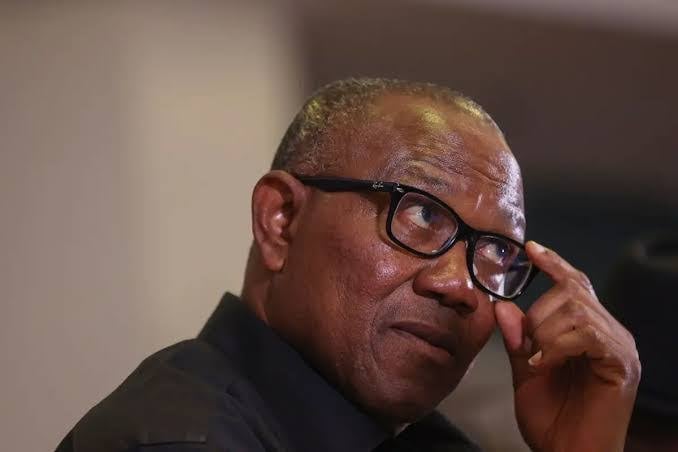
Presidential candidate of the Labour Party (LP) in the 2023 election, Peter Obi, has said he will serve only one term of four years if elected president in 2027, even at gun point.
Obi made this assertion when he poke in an interview with News Central TV
“I want to be a one-term president because of stability,” he said.
“I would not stay a day longer than four years, even with a gun to my head.”
The former governor of Anambra criticised the economic policies of the President Bola Tinubu administration, including borrowing and the rising cost of living, saying Nigeria has entered one of its most difficult periods ever.
Obi placed third in the 2023 general election, behind former Vice-President Atiku Abubakar and Tinubu, who won the contest.
After teaming up with the opposition coalition under the African Democratic Congress (ADC) in June 2025, Peter Obi consistently vowed to serve a single term if elected president.
Speaking during a Twitter Space hosted by Parallel Facts on June 30, 2025 Peter Obi said any candidate from the south elected president in 2027 must be prepared to leave office on May 28, 2031, in line with the “unwritten power-sharing agreement” and the zoning principle.
He added that the zoning principle — which rotates the presidency between the north and south — is a commitment he has long championed.
In a post on his official X page in August last year, the former running mate emphasised his one-term pledge.
He said history has shown that purposeful leadership is not defined by how long one stays in power but by the impact made within a short period.
“One of the greatest American presidents, Abraham Lincoln, served only four years, yet his legacy endures. John F. Kennedy did not complete a full term, but his ideals still inspire,” he wrote.
“In Africa, Nelson Mandela, revered globally as a symbol of justice and reconciliation, chose to serve only one term as president of South Africa despite immense public pressure to stay longer.
“His decision was a deliberate act of leadership — a statement that power must serve the people, not the self.
“Indeed, history shows that the longer many African leaders remain in power, the more likely they are to be corrupted by it.”