US President Donald Trump has reversed a key Obama-era scientific ruling that underpins all federal actions on curbing planet-warming gases.
The so-called 2009 “endangerment finding” concluded that a range of greenhouse gases were a threat to public health. It’s become the legal bedrock of federal efforts to rein in emissions, especially in vehicles.
The White House called the reversal the “largest deregulation in American history”, saying it would make cars cheaper, bringing down costs for automakers by $2,400 per vehicle.
Environmental groups say the move is by far the most significant rollback on climate change yet attempted and are set to challenge it in the courts.
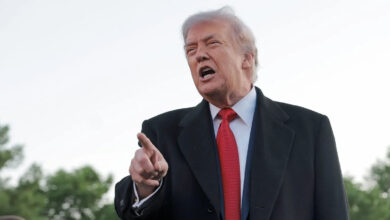
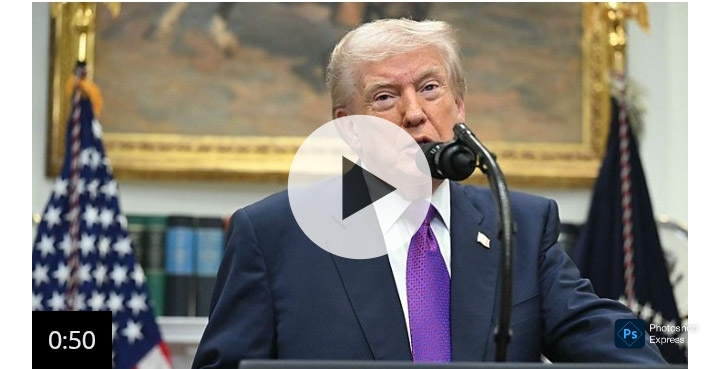
Speaking in the Oval Office on Thursday, Trump said the 2009 ruling was “a disastrous Obama era policy that severely damaged the American auto industry and massively drove up prices for American consumers”.
“This radical rule became the legal foundation for the Green New Scam, one of the greatest scams in history,” added the Republican president, about the Democrats’ climate agenda.
Former President Barack Obama, who infrequently comments on the policies of sitting presidents, said that repealing the finding would make Americans more vulnerable.
“Without it, we’ll be less safe, less healthy and less able to fight climate change — all so the fossil fuel industry can make even more money,” he wrote on X.
Analysis: Trump takes victory lap after biggest climate rollback yet
The Environmental Protection Agency (EPA) first took a stance on the impacts of greenhouse gases in 2009, in the first year of Obama’s first term.
The agency decided that six key planet-warming greenhouse gases, including carbon dioxide and methane, were a danger to human health.
With a divided Congress unable to agree on legislation to tackle rising global temperatures, the EPA finding became central to federal efforts to rein in emissions in the years that followed.
“The endangerment finding has really served as the lynchpin of US regulation of greenhouse gases,” said Meghan Greenfield, a former EPA and Department of Justice attorney.
“So that includes motor vehicles, but it also includes power plants, the oil and gas sector, methane from landfills, even aircraft. So it really runs the gamut, all of the standards for each of the sectors is premised on this one thing.”