Israel’s High Court has temporarily halted a ban on international aid groups from working in the occupied Palestinian territories unless they meet strict new rules.
The injunction came ahead of an Israeli deadline for 37 well-known organisations to stop work, something the groups warn will remove a lifeline for vulnerable people and cause “irreparable harm”.
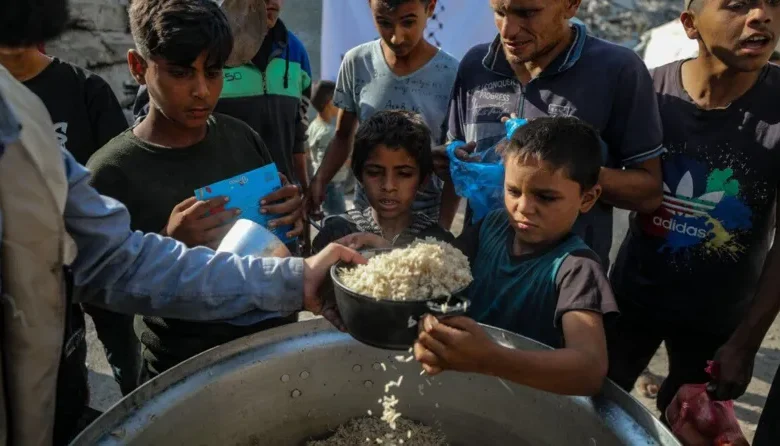
Four months into a fragile ceasefire in war-torn Gaza, most of the more than two million population relies on aid – for food, medical care and water. In the West Bank, humanitarian organisations have been helping Palestinians who have been forced off their land by rapid Israeli settlement expansion and settler violence.
In December, Israel told organisations – including Médecins Sans Frontières (MSF, Doctors Without Borders), Oxfam, Save the Children, ActionAid and the Norwegian Refugee Council (NRC) – that their registrations had expired. They were given 60 days to renew them – by complying with new rules – or cease operations by 1 March.
This week, a group of 17 NGOS jointly petitioned the High Court to suspend the new measures, arguing that Israel has obligations as an occupying power under international humanitarian law.
Responding on Friday, Judge Dafna Barak-Erez said there was “a real legal dispute” which would require more time to work through.
The right-wing government of Israel’s Prime Minister, Benjamin Netanyahu, has taken a tough stance against international and Palestinian NGOs as well as UN agencies, some of which have operated in the region for decades, citing security reasons. It has also passed legislation banning the UN agency for Palestinian refugees, Unrwa, from operating in Israel, impacting its work in the West Bank and Gaza.
Israel has claimed that Unrwa – and other organisations, including MSF – have been infiltrated by members of Palestinian armed groups or have ties to them. The humanitarian groups strongly deny that.
Israel’s Ministry for Diaspora Affairs and Combating Antisemitism says its “clear transparency requirements” mean all NGOs and humanitarian organisations must now give full details of their staff, funding sources and operational structures. Its stated aim is to prevent any links to Palestinian armed groups in the wake of the Hamas-led attacks on Israel on 7 October 2023 which triggered the Gaza war.
Israeli operating licences can be lost through actions such as “delegitimisation of the State of Israel, legal campaigns targeting soldiers of the Israel Defense Forces (IDF), Holocaust denial, denial of the 7 October atrocities or documented cooperation with terrorist organisations”.
Aid groups have rejected sharing details of their personnel, pointing out that hundreds of humanitarian workers have been killed during the Gaza war. Those based in Europe say the demands breach EU laws on data protection and privacy.