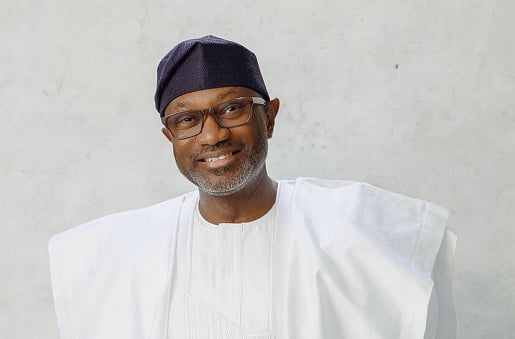
Chairman of First HoldCo, Femi Otedola, has said First Bank has met the N500 billion capital requirement of the Central Bank of Nigeria (CBN), advocating for stricter oversight of the nation’s banking sector.
This news comes ahead of the March 2026 deadline set by the CBN, following a regulatory directive mandating banks to raise their capital base in March 2024.
CBN had pegged the minimum capital requirements for commercial banks with international licences at N500 billion. Those of national and regional financial institutions were fixed at N200 billion and N50 billion, respectively.
About 27 banks have raised capital, with 16 of them fully meeting the regulatory requirement, according to CBN governor
Olayemi Cardoso.
First Bank is a subsidiary and the commercial banking arm of First HoldCo.
Otedola expressed the parent company’s commitment to more capital injection.
“FirstBank, the commercial banking arm of First HoldCo Plc, has met the ₦500 billion minimum capital base required by the Central Bank of Nigeria (CBN) for an international banking licence. The shareholders of FirstHoldco are committed to injecting additional capital into its existing subsidiaries and new business adjacencies,” the businessman said.
He said he was impressed by the “bold” decision to recapitalise the banking sector, noting that it was the right move, even though it was “unnecessarily” criticised early on.
He said following the massive profits banks recorded in 2024, 2025 became a year of prudence and consolidation.
This, according to the influential investor, is the only way banks can support real sector lending and drive genuine economic growth in 2026.
“From where I stand, and with the benefit of many years in Nigeria’s business landscape, I believe it is time to raise the minimum capital requirement for international banking licences from ₦500 billion to at least ₦1 trillion,” Otedola said.
“A modern economy aiming for the $1 trillion mark cannot rely on weakly capitalised banks. Stronger banks mean better governance, broader ownership, and institutions that are not run like personal estates, a problem we have lived with for far too long.”